Home El Equipo Workshops Results Contact
EN | ES
Talleres para Negocios

Three sessions. One clear picture.

Each session in the Credolavento program addresses a specific gap in how middle managers understand financial reports. Together, they build a complete and practical reading framework that works with the reports you already have.

Session 01

The Income Statement: What It Actually Shows You

The income statement is the most fundamental financial document a manager receives — and the most consistently misread. Most managers look at the bottom line (net profit) and draw conclusions from there. This session reorients that habit by showing why gross profit is the more diagnostic number, and how the relationship between revenue and cost of goods sold tells you something net profit cannot.

By the end of this session, participants can identify every line item in their own income statement, understand what each one represents in operational terms, and explain why a business can show strong revenue growth while the financial situation is actually deteriorating.

Topics Covered
The structure of an income statement — revenue, COGS, gross profit, operating expenses, net profit
Why gross profit margin is a more stable indicator than net profit
The difference between what you sell and what you keep
Reading your own report: identifying each element in context
Common misreadings and how to avoid them
What to look at first when you open a monthly report
Participants analyzing income statement structure during workshop session one
Session 02

When Fixed Costs Eat Your Margin

This session addresses one of the most common and least-discussed problems in growing Mexican SMEs: the way fixed costs can silently erode profitability even as revenue climbs. Participants learn to distinguish fixed from variable costs in the context of their own reports, and to recognize the specific patterns that indicate overhead is becoming a structural problem.

The session also introduces the concept of operating leverage — how the ratio of fixed to variable costs amplifies both gains and losses — and what this means for the decisions managers make about staffing, facilities, and contracts.
Topics Covered
Fixed vs. variable costs: definitions that actually make sense in operations
How to identify fixed cost items in your monthly report
The margin erosion pattern: what it looks like across three to six months of data
Operating leverage: the amplification effect for better and worse
When overhead becomes a structural constraint on growth
Practical decisions that affect fixed cost structure
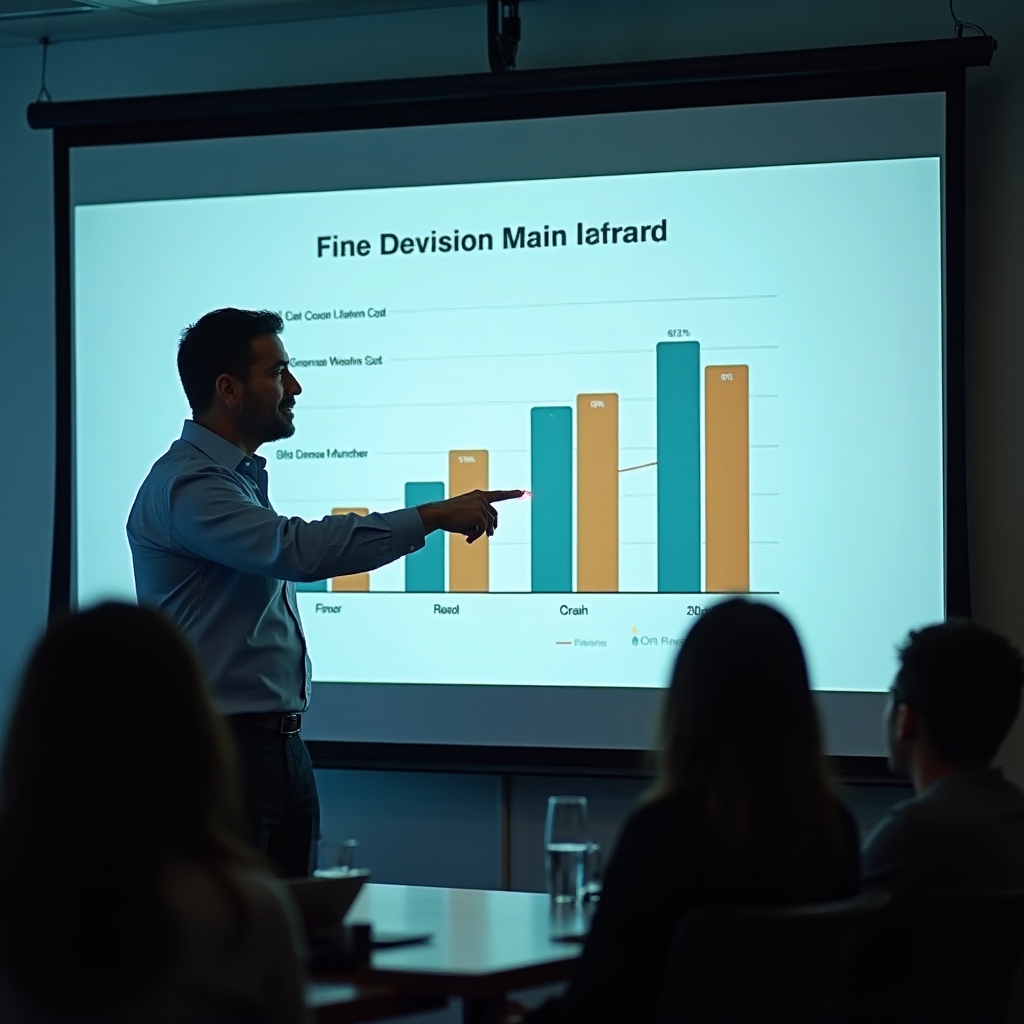
Workshop facilitator explaining fixed cost analysis using projected financial data
Session 03

Detecting Problems Before the Money Runs Out

Financial crises in small and mid-sized businesses rarely arrive without warning. The signals are typically present in the monthly reports for several months before the situation becomes critical — but they require a trained eye to see. This session builds that capacity by introducing the specific patterns, ratios, and trend indicators that appear in income statements before a liquidity problem becomes a crisis.

Participants also learn how to connect the income statement to the cash reality of the business — understanding why a profitable company can still run out of money, and how to read both documents together to get a more complete picture.

Topics Covered
The early warning signals: which patterns to look for and where
Trend reading: comparing two or three months side by side
Why profit and cash are not the same thing
The questions to ask your accountant when something looks off
When to escalate: recognizing situations that require immediate attention
Building a personal reading habit: what to check every month
Small group of managers reviewing trend data and warning indicators in workshop
Real Reports Used · Discussion-Based Format · 3 Focused Sessions · Small Group Setting · Mexican SME Context · Real Reports Used · Discussion-Based Format · 3 Focused Sessions · Small Group Setting · Mexican SME Context

How the program is structured

Small Group Format

Sessions are conducted in small groups to allow for meaningful discussion, individual attention, and the kind of peer learning that happens when participants can compare their own reports with others.

Bring Your Reports

Each participant is asked to bring two or three months of their company's income statements. The analysis in each session uses these real documents — not invented examples.

In-Person in Xalapa

Sessions are held in Xalapa, Veracruz. The in-person format is intentional — the discussion-based method works best when participants are in the same room, working through the same documents together.

Follow-Up Support

After the three sessions, participants can submit questions by email. The team responds to questions that arise when applying the session content to new monthly reports.

Ready to understand your own numbers?

Contact the team to ask about the next available program cycle, group size, and what to bring to the first session.